How EU Schools Handle Phones in 2026: What the ENESET Report Shows
A 2026 ENESET report maps mobile phone bans across EU schools. Half of EU countries now run full school-day bans — here's the picture, and where Spain stands.
A Europe-wide picture of school phone rules
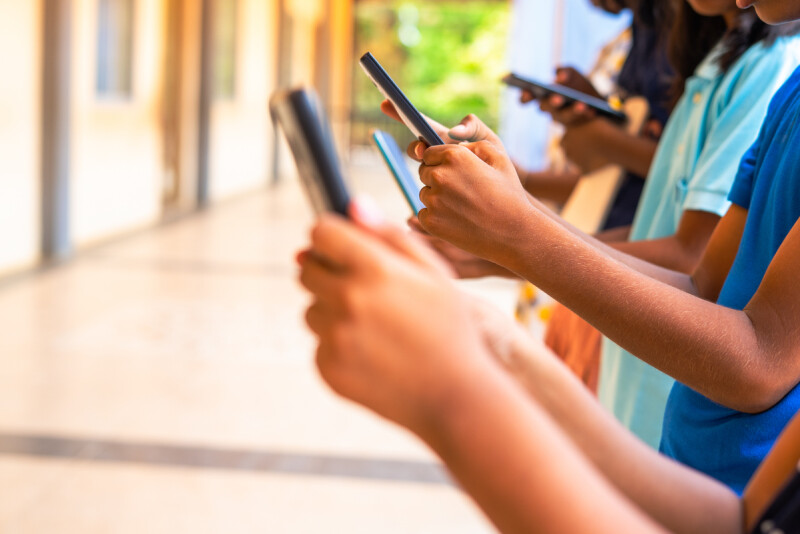
Concerns about the impact of mobile phones on learning, behaviour and wellbeing have pushed most of Europe to act. The European School Education Platform has published findings from a 2026 ENESET report mapping mobile phone bans in schools across the EU — and the picture is one of rapid, uneven change.
What the research says about phones and learning
The ENESET review found that mobile phones can negatively affect cognitive performance even when not actively used, by reducing concentration and creating residual focus. Large-scale OECD PISA data shows digital distraction — being disturbed by classmates' devices — is common and linked to lower academic performance. Frequent phone use is also linked to lower grades, less effective learning and sleep disruption, with additional evidence connecting excessive use to anxiety, loneliness and cyberbullying exposure. The report notes these relationships are complex and not always causal, and that much problematic use happens outside school hours.
The policy map: three types of national rule
About half of EU countries have now adopted a full school-day ban, while four have classroom-only bans and seven have no national legislation at all:
| Policy | Countries | Number |
|---|---|---|
| Full school-day ban | Austria, Belgium, Cyprus, France, Greece, Hungary, Ireland, Italy, Latvia, Luxembourg, Malta, Portugal, Slovenia | 13 |
| Classroom ban | Finland, Netherlands, Romania, Slovakia | 4 |
| No national ban | Czechia, Estonia, Germany, Lithuania, Poland, Spain | 7 |
| Planned | Bulgaria, Denmark, Sweden | 3 |
Under a full school-day ban, pupils switch devices off and keep them out of sight from arrival to departure, sometimes stored in lockers or handed in. Under a classroom ban, phones can still be used during breaks. Italy, an early mover in 2007, extended its restriction in 2024 to cover breaks and educational use for pupils aged 3 to 14, and to upper secondary schools in 2025.
Where Spain stands
Spain is one of the seven EU countries with no national school phone ban. Like Germany, it manages restrictions at regional level — each autonomous community sets its own rules, and most have now banned or heavily restricted phones in primary and secondary schools. That regional patchwork means enforcement methods vary widely from one community to the next, and schools often carry the burden of choosing and funding a workable system themselves.
Bans work best as part of a broader effort
The report is clear that in-school restrictions alone are not enough: children have significant free time outside school to use their devices. It recommends combining school-level rules with home-school collaboration, alternative activities during breaks, self-regulation skills and digital literacy in the curriculum. Whatever the policy mix, schools still need a consistent, documented way to keep phones away during the day — which is exactly the enforcement gap a phone locking pouch closes without confiscation or locker infrastructure.
Next step
If your school is reviewing its mobile phone policy, request a PhoneLock sample pack or a quote to trial the lock and unlock process with your students and staff. Further reading: the Spain phone pouches page and our overview of school phone policies worldwide.
Frequently asked questions
- How many EU countries ban phones in schools?
- As of the 2026 ENESET report, 13 EU countries have a full school-day ban, 4 have classroom-only bans, 7 have no national ban, and 3 more have bans planned.
- Does Spain have a national school phone ban?
- No. Spain manages phone restrictions at regional level, so each autonomous community sets its own rules — most have banned or heavily restricted phones in schools.
- Do school phone bans improve learning?
- Evidence reviewed by ENESET links phone presence to reduced concentration, lower grades and sleep disruption. Evidence on the effectiveness of bans is mixed, so researchers recommend balanced, well-enforced policies over strict universal bans.
Need help with phone-free spaces?
Contact PhoneLock for a free consultation, sample pack or quote for your school, venue or event.